Piercings
Rook Piercing
Where the rook sits, how much it hurts, healing time, the right jewelry, and aftercare — from the piercers at Apollo in Santa Monica.
Book a piercingPlacement
Antihelix fold (upper inner ear)
Pain level
6–7 / 10
Healing
6–12 months
Jewelry
Curved barbell or hoop
Min. age
14+
The basics
What is a rook piercing?
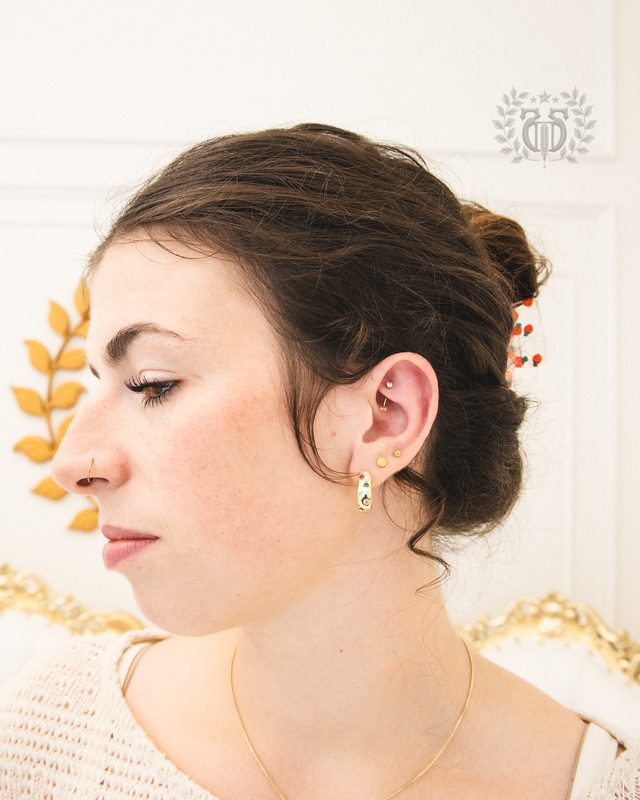
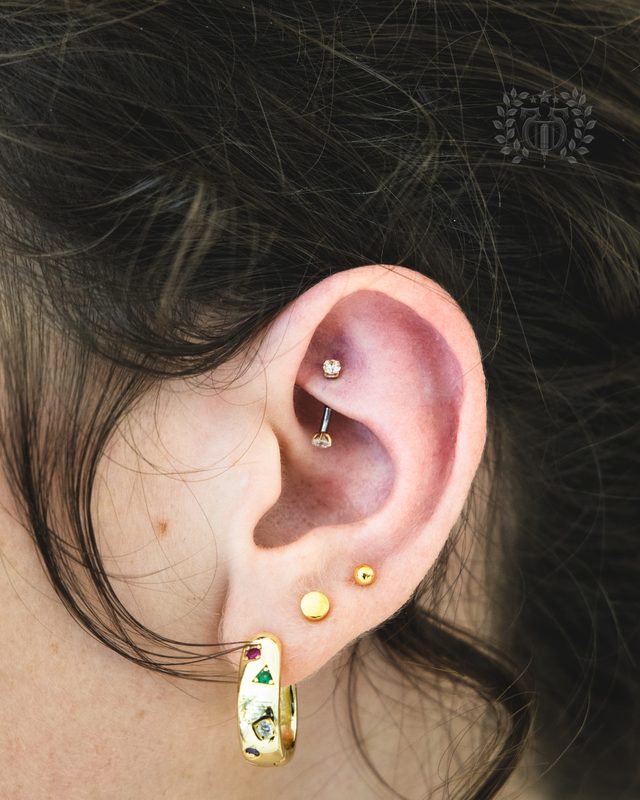
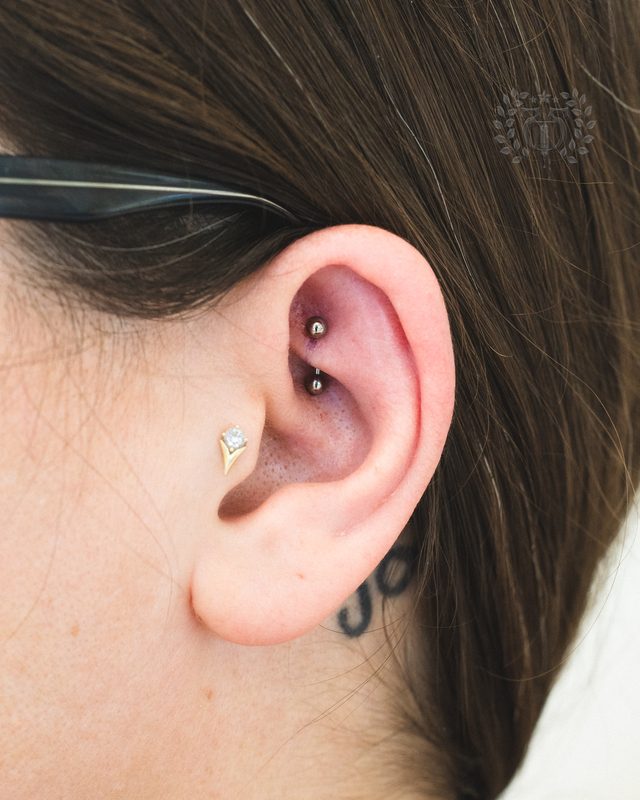
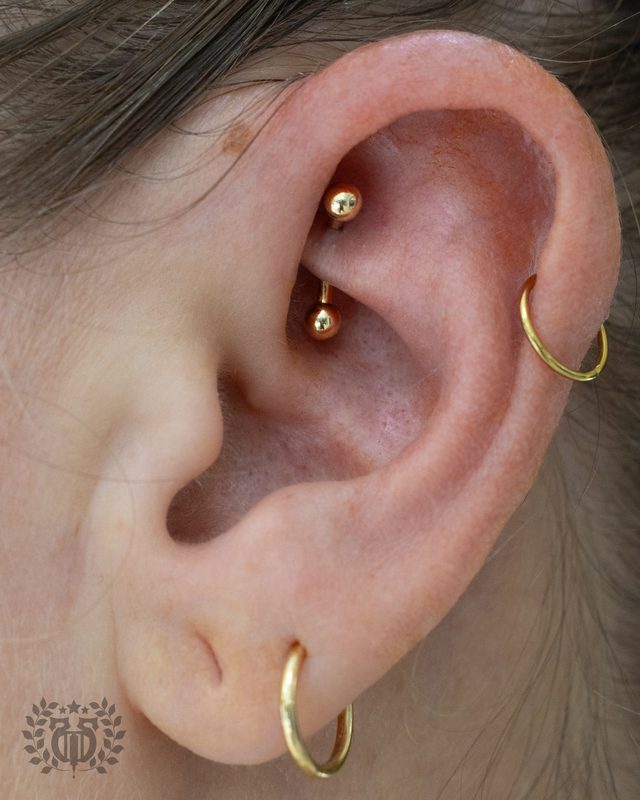
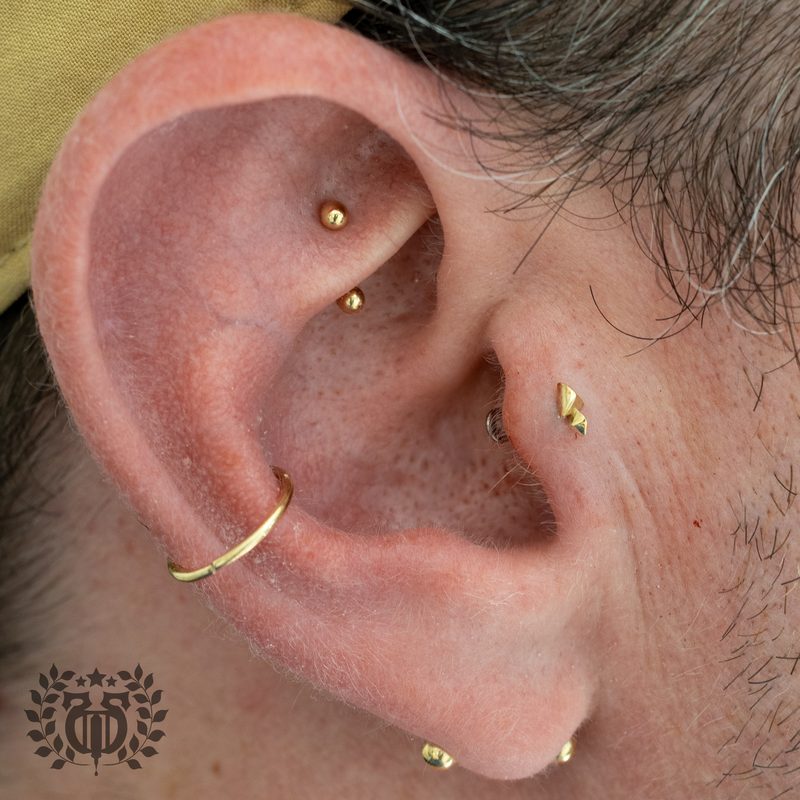
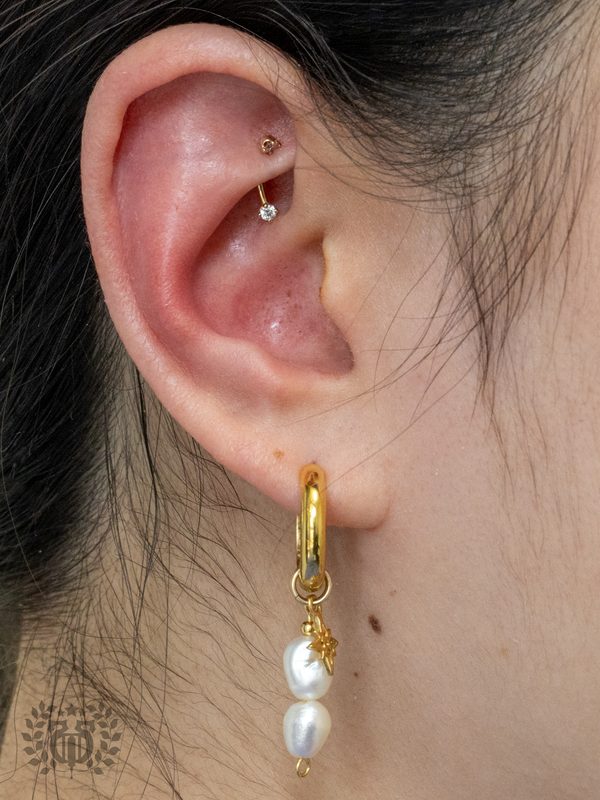
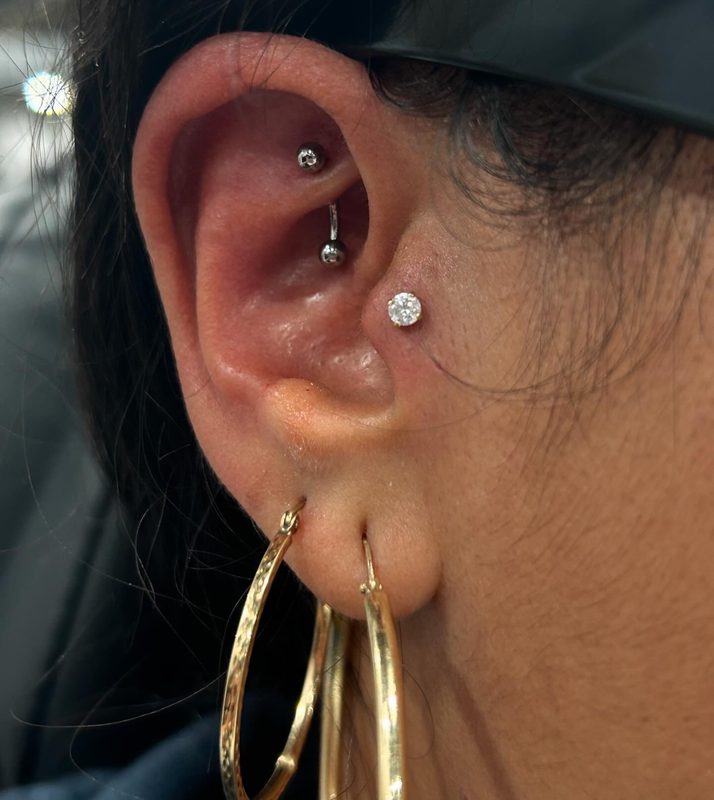
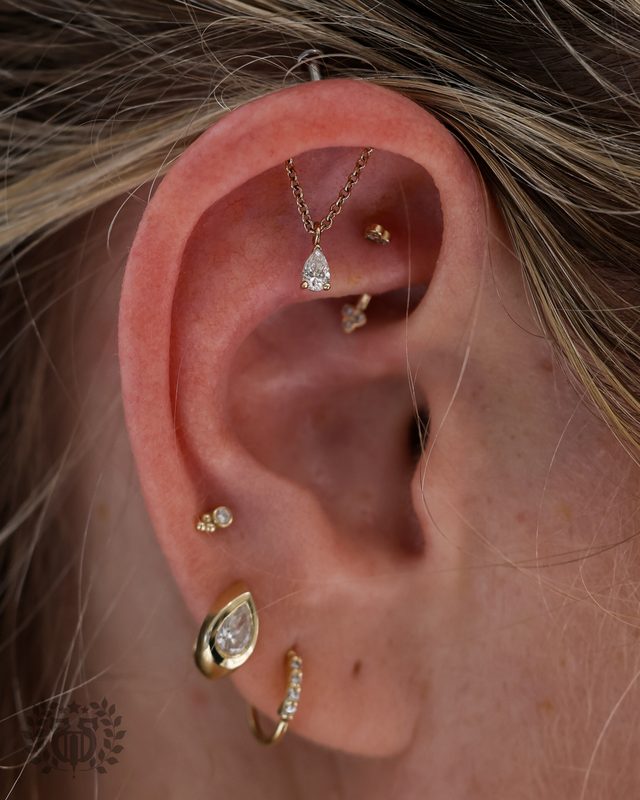
The rook sits in the antihelix — the raised fold of cartilage that runs along the top of the inner ear, just above the daith. Because it passes through a double-thickness fold of cartilage, the rook is a dimensional, eye-catching placement that a small curved barbell shows off perfectly, and it adds vertical interest to a curated ear built around a conch or helix.
The basics
Anatomy & placement
The rook depends entirely on your anatomy. Some ears have a pronounced, well-defined antihelix ridge that presents an obvious channel for the barbell; others have a shallow or flat fold that won't hold a piercing at a comfortable angle. Your Fakir-certified piercer will palpate the ridge, assess its depth, and be honest if your ear isn't a good candidate — a rook forced into a shallow fold sits under tension, heals poorly and is prone to migrating out. When the fold is right, the piercing nestles into it and stays put.
How it feels
Does a rook piercing hurt?
The rook is one of the firmer ear piercings because the fold it passes through is thick — most clients rate it 6–7 out of 10. It's a strong pressure for a moment, then over. As with all our cartilage work, it's done with a single-use needle, never a gun. Expect a dull ache and some throbbing for the rest of the day and tenderness when you touch it for the first couple of weeks.
Healing
How long does it take to heal?
Expect 6–12 months. The rook's thicker tissue makes it one of the longer ear-cartilage heals, so patience and a hands-off approach matter. We schedule a downsize once initial swelling resolves — usually around month three or four — to keep the jewelry seated correctly and stop a long post from levering on the fold.
Jewelry
Jewelry for a rook piercing
The classic rook starter is a small curved barbell, which nests neatly into the fold and clears swelling without pressing on either side. Once healed, a fixed-bead ring is a popular swap. We install implant-grade titanium or solid 14k gold and size it to your individual fold so it doesn't sit under tension — the wrong length or a too-tight ring is the usual reason a rook stays angry.
At Apollo
Bumps, migration & common problems
Because the rook passes through a thick fold, it's more prone than most ear piercings to irritation bumps if it's disturbed — sleeping on it, tight beanies, over-ear headphones and playing with the jewelry are the usual culprits. A bump is not an infection; it's the tissue reacting to pressure or movement, and it settles once you remove the cause and stay on saline. A rook that was pierced too shallow or at the wrong angle can slowly migrate toward the surface — another reason correct placement and correctly sized jewelry matter more here than almost anywhere on the ear. Redness that spreads, heat and discharge point to infection and mean a visit to your doctor.
Aftercare
Aftercare
Saline twice daily, no sleeping on that ear, keep earbuds and tight hats off it, and don't rotate the jewelry. Avoid swimming while it heals. See the full routine on our piercing aftercare guide, and compare placements on our ear piercing chart.
Our standards
Why get pierced at Apollo
Every piercing at our Santa Monica studio is done with a single-use sterile needle — never a piercing gun, which can't be sterilized and crushes cartilage. We install only implant-grade titanium (ASTM F-136), solid 14k/18k gold, or niobium, placed and checked by a Fakir-certified senior piercer. Your fresh jewelry is sized long for swelling, and a downsize follow-up is built into every piercing so it settles cleanly.
Pricing a rook? Our piercing prices guide gives type-by-type cost ranges and Apollo's published rates.
Questions
Frequently asked questions
Does a rook piercing hurt more than other ear piercings?
Slightly — most people rate it 6–7 out of 10 because it passes through a thick double fold of cartilage. It's a brief, strong pressure rather than a lingering pain.
How long does a rook piercing take to heal?
Usually 6–12 months. It's one of the longer cartilage heals due to the tissue thickness, so leave the jewelry in and untouched until your piercer confirms it's settled.
What jewelry is best for a rook?
A small curved barbell is the standard starter because it sits flush in the fold. A fixed-bead ring is a popular option once the piercing is fully healed.
Can everyone get a rook piercing?
Not every ear has a pronounced antihelix fold. We assess your anatomy first — if the fold is too shallow, we'll suggest a placement that will heal and sit well instead.
Studio portfolio
Rook Piercings at Apollo
Real work from our piercing chairs — implant-grade titanium and gold, placed freehand by our Fakir-certified piercers.