Piercings
Conch Piercing
Inner vs outer conch, how much it really hurts, healing time, jewelry, and aftercare — from the piercers at Apollo in Santa Monica.
Book a piercingPlacement
Center cartilage of the ear
Pain level
5–6 / 10
Healing
4–9 months
Jewelry
Flat-back stud or ring
Min. age
14+
The basics
What is a conch piercing?
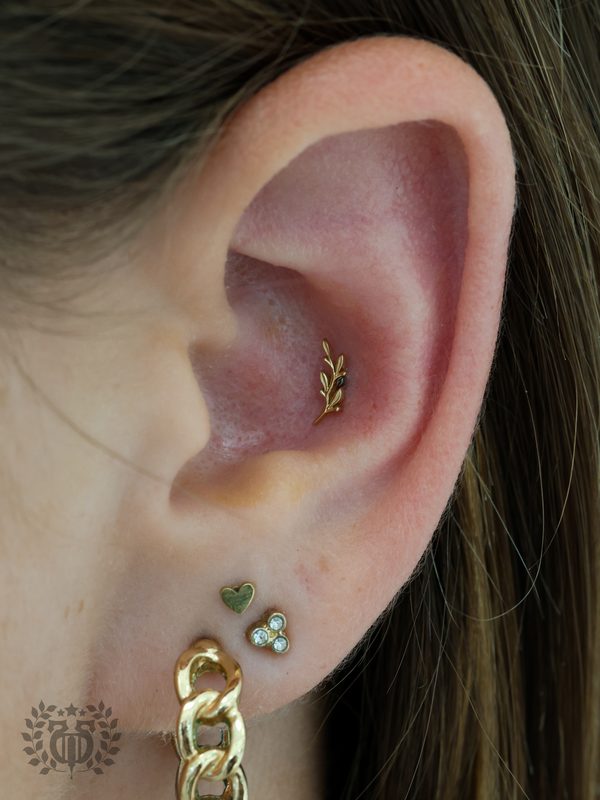
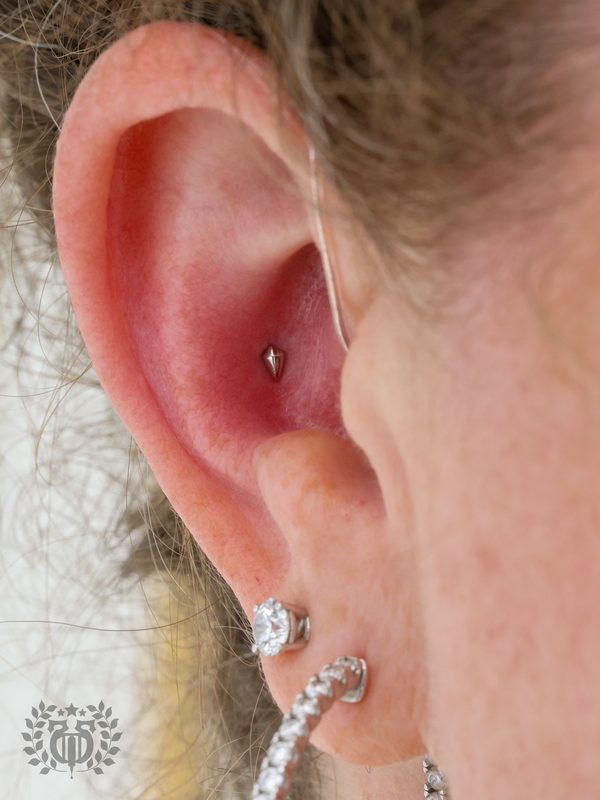
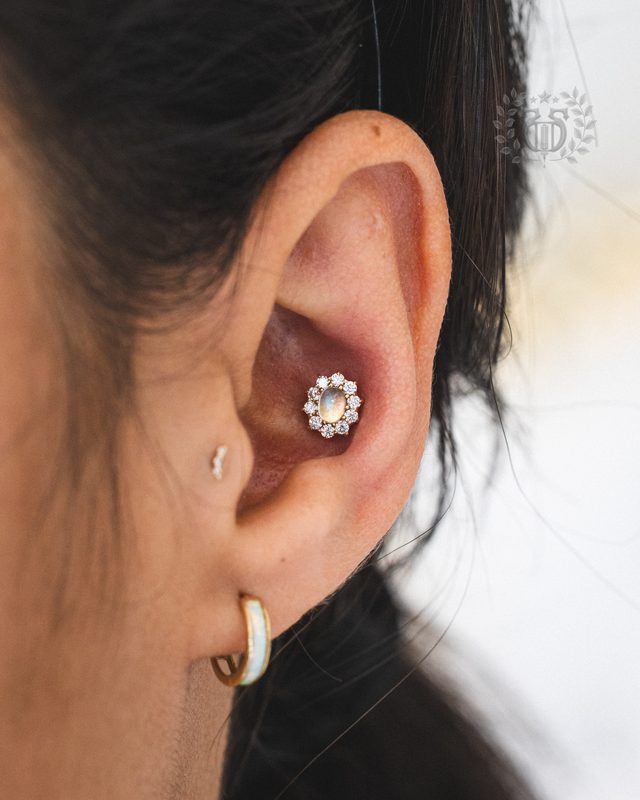
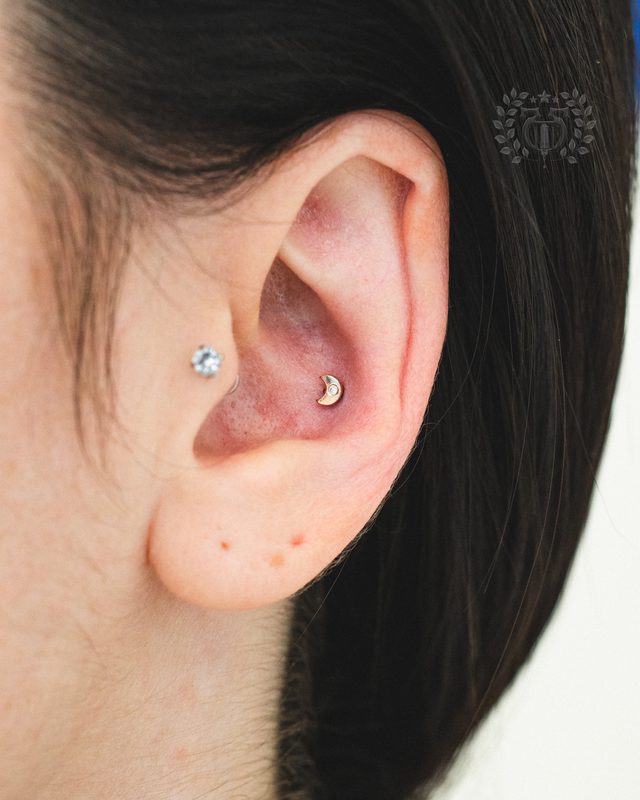
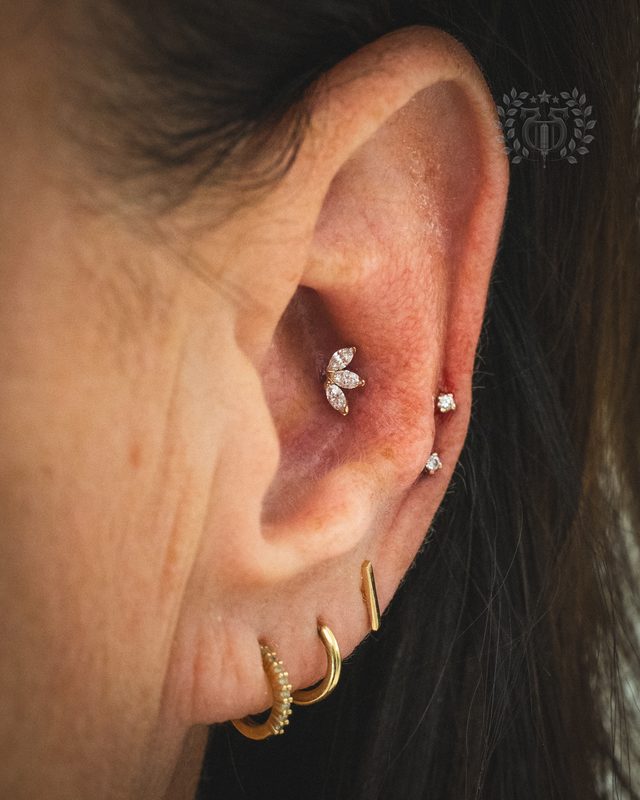
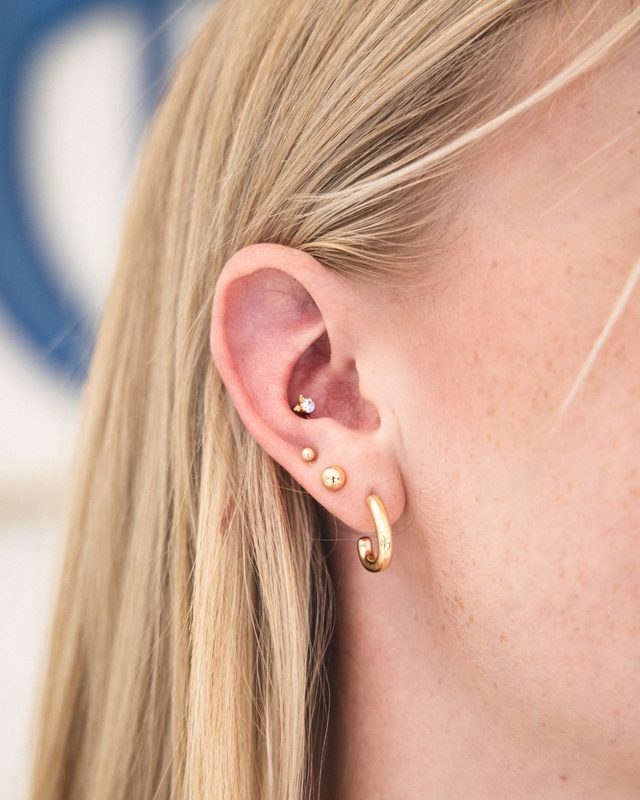
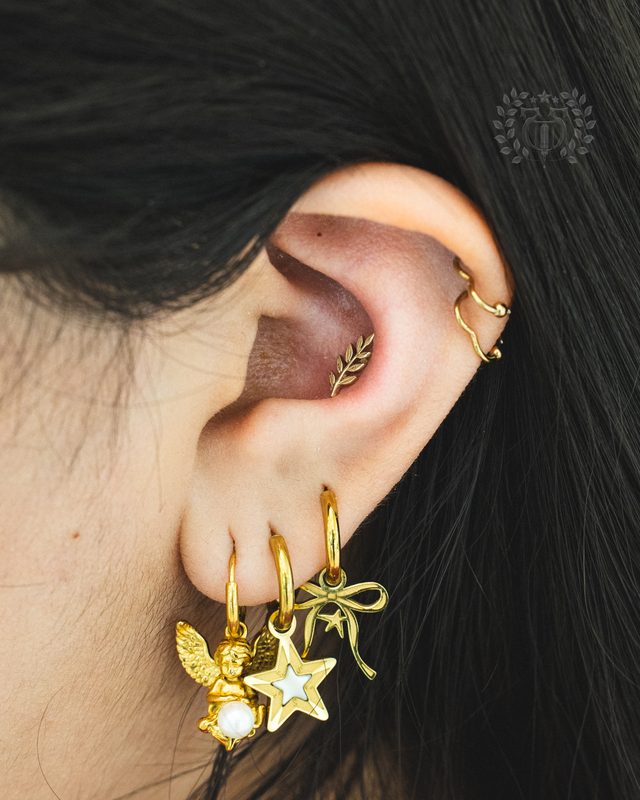
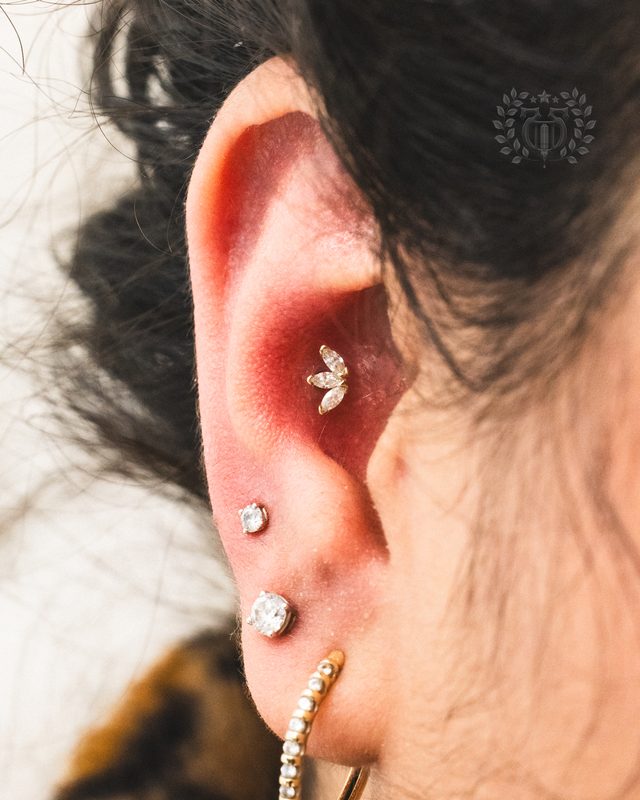
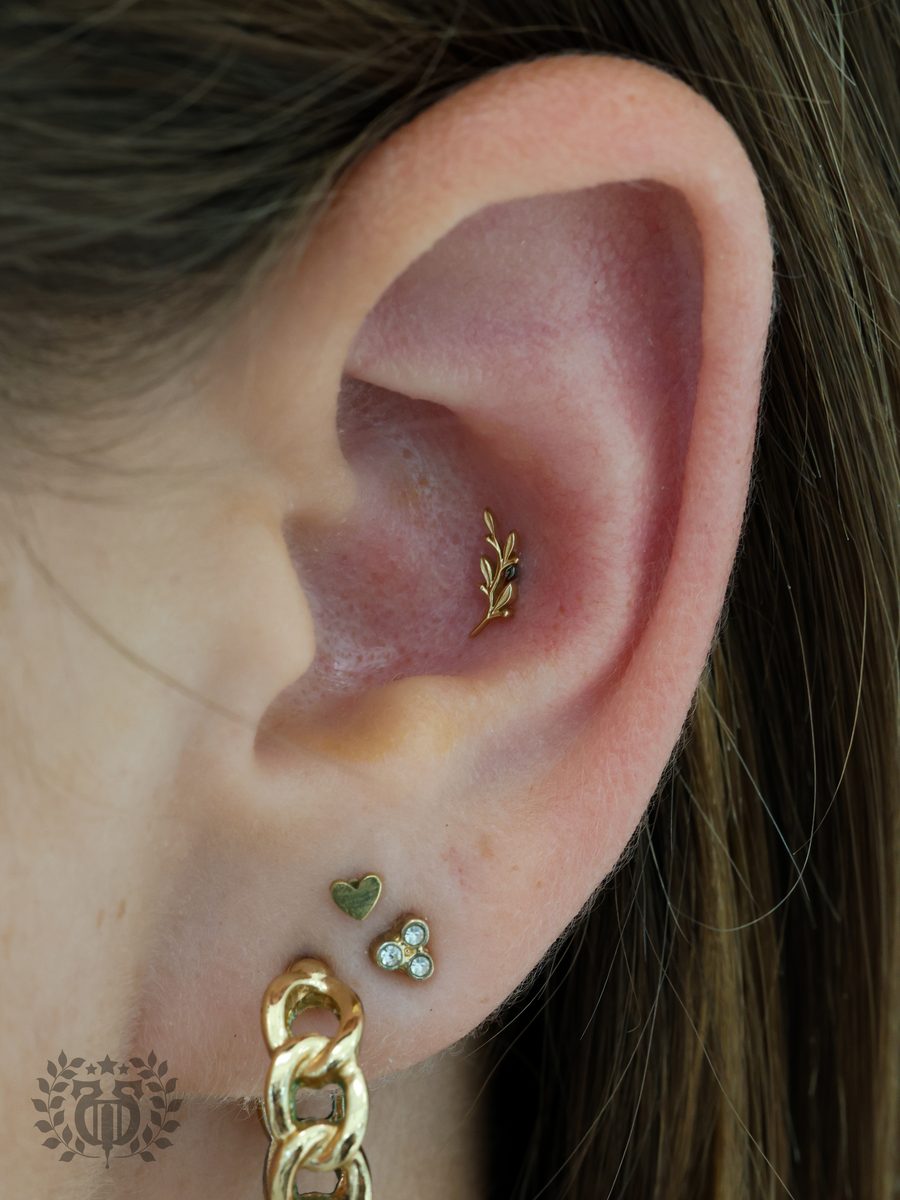
The conch is the large, shell-shaped bowl of cartilage in the center of your ear — it's named after the conch shell. There are two placements: an inner conch sits a flat-back stud through the middle of that bowl, while an outer conch sits closer to the rim and often wears a large captive ring that hugs the edge of the ear. It's a bold, central placement that anchors a curated ear beautifully, and it pairs naturally with a helix along the rim or a tragus at the front.
The basics
Anatomy & placement
Not every ear carries a conch the same way. A deep, flat conch bowl takes a stud comfortably; a shallow or heavily curved conch may sit better with a slightly different angle or a ring. Your Fakir-certified piercer will look at the thickness and contour of your cartilage, mark the spot, and let you check it in a mirror before anything happens. An inner conch can later be stretched to wear an orbital or a large-gauge ring, but that's a healed-piercing project — never something to force on a fresh one.
How it feels
Does a conch piercing hurt?
The conch is dense cartilage, so it's a firmer, deeper pressure than a lobe — most clients rate it a 5–6 out of 10, sharp for a second or two and then done. We use a single-use needle (a gun cannot safely pierce the conch and can shatter cartilage) and mark the spot for your approval first. You'll feel heat and a dull throb for the rest of the day, which is normal.
Healing
How long does it take to heal?
Plan for 4–9 months, sometimes up to a year. Cartilage heals from the outside in, so a conch that feels fine at week six is not actually finished — leaving the jewelry alone is the single biggest factor in clean healing. We book a downsize around month four to swap the long install post for a shorter one once swelling settles, which keeps the disc from pressing into the back of the ear.
Jewelry
Jewelry for a conch piercing
We start most conch piercings with a flat-back implant-grade titanium labret stud — the flat disc sits comfortably against the back of the ear, so you can sleep and wear headphones more easily during healing. Solid 14k gold is available, and rings (for an outer conch or a healed inner conch) get fitted once the piercing has settled. We never install cheap externally-threaded jewelry, which snags tissue on the way in and slows healing.
At Apollo
Bumps, migration & common problems
The most common conch complaint is an irritation bump — a small, firm dot beside the piercing, usually caused by sleeping on it, headphones, or knocking the jewelry. It is not an infection and it does not mean the piercing is failing; it almost always resolves once the source of pressure stops and you stay consistent with saline. Genuine infection (spreading redness, heat, yellow-green pus, fever) is rare with sterile technique and warrants a doctor. Conch piercings migrate far less than surface piercings because they pass through solid cartilage, but a stud that's too short after swelling can embed, which is exactly why the downsize visit matters.
Aftercare
Aftercare
Spray sterile saline twice a day, avoid sleeping on that side, keep headphones and phone screens off it, and don't twist or rotate the jewelry. Skip pools, lakes and hot tubs while it's healing. Full routine on our piercing aftercare guide, and if you're deciding between placements, our ear piercing guide for LA and ear piercing chart map out how a conch sits alongside a rook or daith.
Our standards
Why get pierced at Apollo
Every piercing at our Santa Monica studio is done with a single-use sterile needle — never a piercing gun, which can't be sterilized and crushes cartilage. We install only implant-grade titanium (ASTM F-136), solid 14k/18k gold, or niobium, placed and checked by a Fakir-certified senior piercer. Your fresh jewelry is sized long for swelling, and a downsize follow-up is built into every piercing so it settles cleanly.
Want the numbers first? Our piercing prices guide covers what a conch piercing costs and what moves the price.
Questions
Frequently asked questions
How much does a conch piercing hurt?
Most people rate a conch piercing 5–6 out of 10 — a firm, deep pressure for a second or two because it passes through dense cartilage. Our needle-only technique keeps it quick and precise.
How long does a conch piercing take to heal?
Typically 4–9 months, occasionally up to a year. Cartilage heals slowly from the outside in, so don't change or remove the jewelry until your piercer confirms it's healed at the downsize visit.
Can I wear a hoop in my conch?
Yes, once it's fully healed — an outer conch is often pierced for a ring, while an inner conch usually starts with a flat-back stud and can move to a ring later. We fit the ring to your anatomy in-studio.
Can I sleep on a new conch piercing?
Avoid sleeping on that side during healing. Pressure causes irritation bumps and can shift the angle. A travel pillow with a hole, or simply switching sides, helps a lot.
Studio portfolio
Conch Piercings at Apollo
Real work from our piercing chairs — implant-grade titanium and gold, placed freehand by our Fakir-certified piercers.