Piercings
Labret Piercing in Los Angeles
The standard labret — one clean point centered below the lower lip. Placement, honest pain and healing, titanium jewelry, the dental downsize, and aftercare, from Apollo's Fakir-certified piercers in Santa Monica.
Book a consultationThe placement
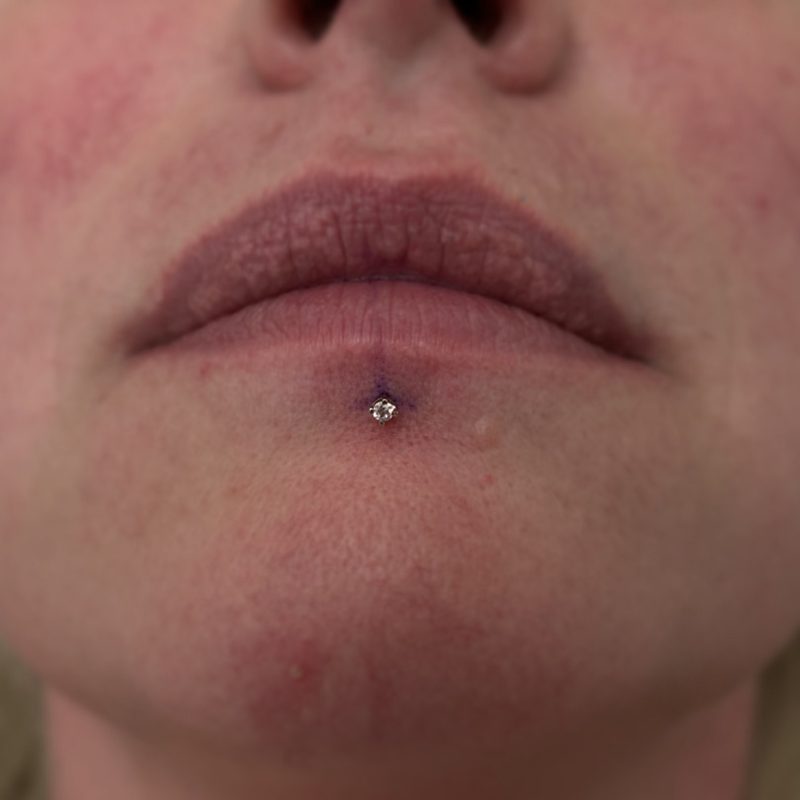
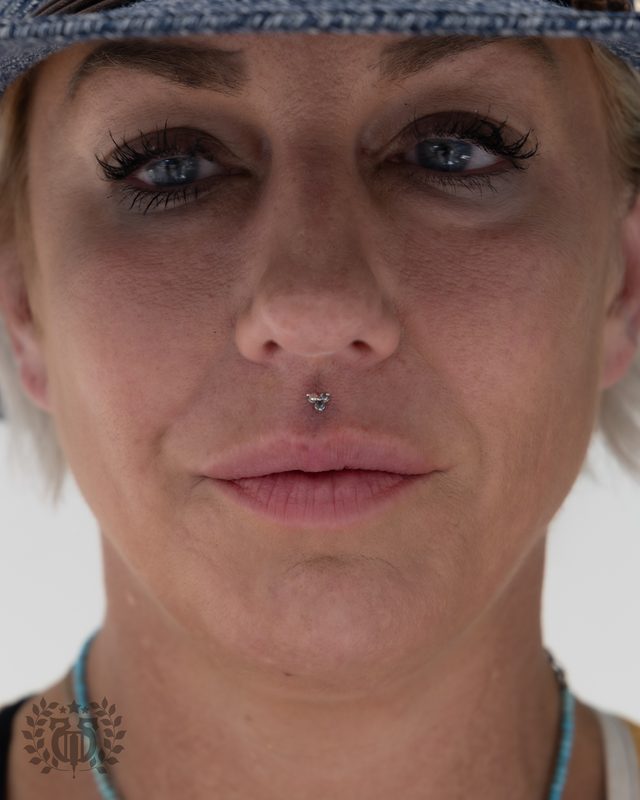
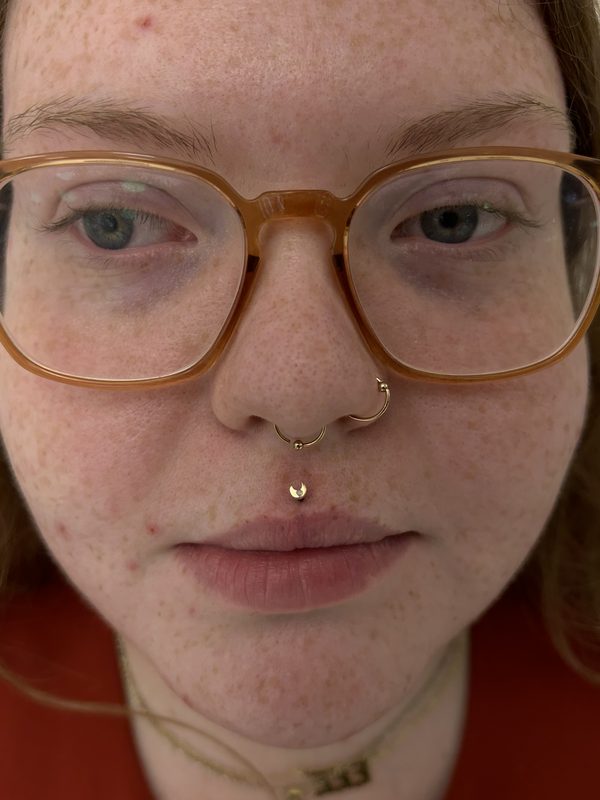
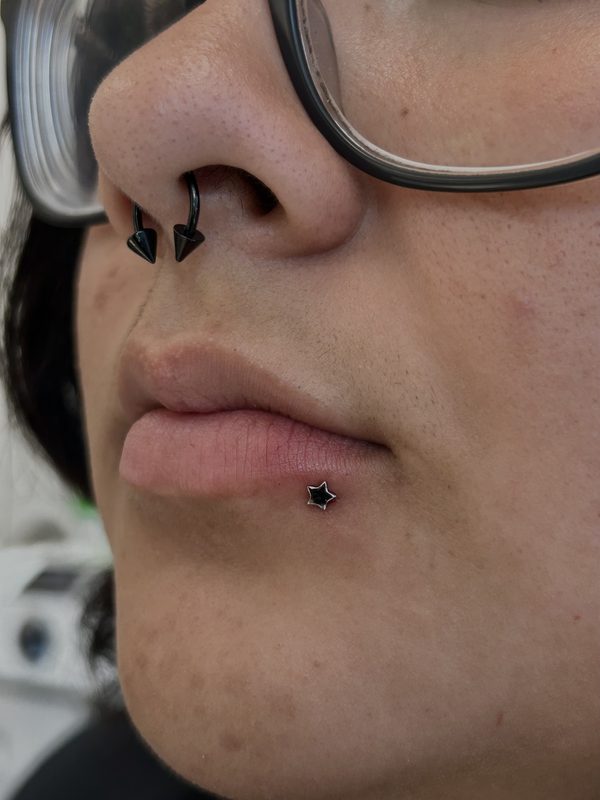
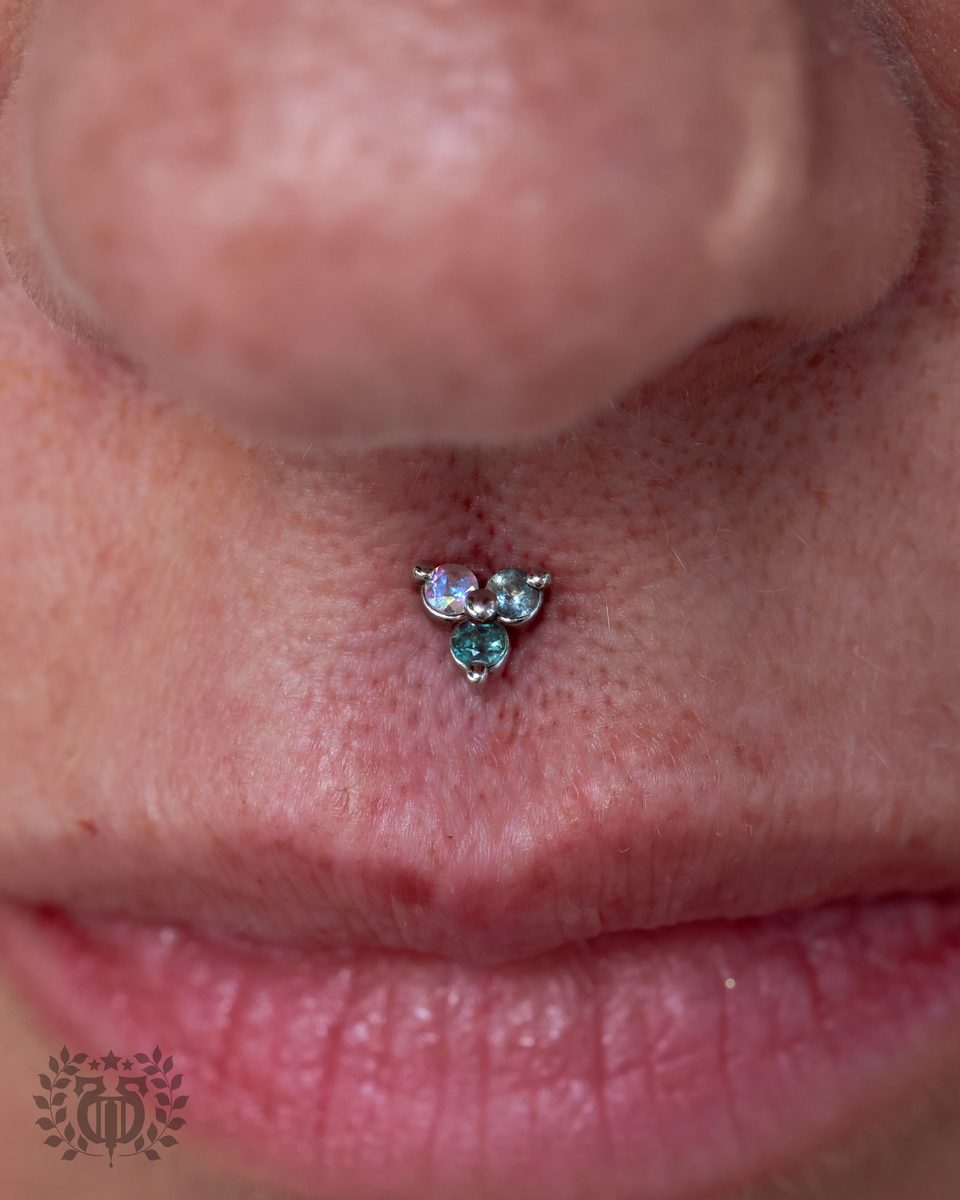
A labret is one clean point centered below the lower lip.
The standard labret is the most-requested and most-forgiving lip piercing we do at Apollo — and the one people most often mean when they say “lip piercing.”
A labret sits in the center of the soft tissue just below the lower lip line. The needle passes from the outside skin through to the inside of the mouth, and a flat-back stud seats immediately behind it — the flat disc rests against the inside of your lip, the decorative end faces out. That geometry is the whole point: no protruding ball inside the mouth means less early contact with teeth and gums than an old-style ring or externally-threaded stud. A true labret is a single vertical pass through relatively thin, well-vascularized tissue, which is why it heals more predictably than cartilage placements like the conch or tragus.
If you want the broader menu — monroe, medusa, vertical labret, snake bites, ashley — start with our full lip piercing guide. This page stays on the standard labret: the placement, the honest pain and healing picture, the jewelry, and the dental reality nobody warns you about until it’s too late.
Anatomy
Three placement decisions your piercer makes at the mirror.
Millimeters decide whether a labret reads as centered and intentional or crooked for life.
Height below the lip
Where the dot lands
Too high and the disc crowds the gum line; too low and the stud looks like it belongs on the chin. Apollo marks the entry so the outer gem sits just under the lip’s wet-dry border, with the inside disc clearing the gum.
Centered to your smile
Not centered to your face at rest
Lips aren’t perfectly symmetrical. We center the mark to your natural smile and philtrum midline, then re-check in a handheld mirror with you before the needle is uncapped. A labret 2mm off-center shows in every photo forever.
Angle of the pass
Straight in, not tilted
The channel should run perpendicular to the lip so the disc lies flat inside and the post doesn’t angle toward the teeth. A tilted pass is the quiet cause of long-term enamel contact even after a correct downsize.
Pain & healing
Honest timeline. Downsize at week 4–6.
The pinch is brief and forgiving. Eating and talking for the first week is where the real work is — and the downsize is the milestone that protects your teeth.
Jewelry
What goes into a fresh labret.
The metal touching a fresh oral wound decides whether it heals. This is a medical choice, not a style one — style comes after the heal.
Implant-grade titanium (ASTM F-136)
The Apollo default. Nickel-free, biocompatible, MRI-safe — the professional standard for any fresh piercing, and the safest choice for reactive skin. See our sensitive-skin jewelry notes if you react to metals.
Flat-back labret stud
The flat internal disc — not a ball — is what makes this placement kind to teeth and gums. Threadless or internally-threaded only; nothing with sharp external threads dragging through the channel.
Solid 14k or 18k gold
Nickel-free solid gold, never gold-plated, available at install when requested and stocked. A plain 2.5–3mm ball or set gem is the cleanest starter end.
Bioplast backing, after healing
For clients with a history of enamel sensitivity, we can swap the flat metal disc for a soft medical polymer once healed. It’s gentler against teeth over years of wear.
What we never install fresh
Sterling silver, gold-plated, unmarked “surgical steel,” or captive rings. Rings only go in a fully-healed labret — the swelling window won’t accommodate ring geometry.
Longer post at first
Your first stud looks a touch long on purpose. That’s the swelling allowance. Resist buying a shorter one online before your downsize — jewelry too short during swelling can embed.
The dental reality
The part most shops skip.
A labret lives inside a mouth. Over years, the back of the jewelry interacts with teeth and gums. Every risk here is preventable — and prevention is standard Apollo practice.
Enamel wear
A long or ball-backed post grinding lightly against the front of the lower teeth wears enamel over time. Fix: downsize so the disc sits close to the gum, and consider bioplast once healed.
Gum recession
A disc that tucks behind the gum line instead of resting flat rubs tissue continuously. Over decades that shows as recession on dental X-rays. Same fix: the post-healing downsize.
Disclose it to your dentist
Tell your dentist you have a labret so they track the contact point at cleanings. If you have active gum disease, braces, or a healing implant, we ask you to finish that dental work before we pierce.
Aftercare
Four habits that decide how it heals.
A labret is more upkeep than an ear because it heals inside a wet, bacterial, high-motion environment. The protocol is simple; consistency is everything.
Saline outside, rinse inside
Sterile saline (0.9% wound wash) on the outer piercing twice a day. After every meal, drink, and before bed, rinse with alcohol-free mouthwash diluted 50/50 with sterile water. The inside is not self-cleaning.
Soft, cool food for 3–5 days
Soups, yogurt, smoothies, soft eggs. Skip anything sticky, crunchy, spicy, acidic, or piping hot. Cool food also keeps swelling down.
No mouth contact for 4–6 weeks
No kissing, shared utensils, or oral sex. Another mouth’s saliva is the most common way a fresh labret gets infected. This is microbiology, not manners.
Hands off, and watch for trouble
Don’t play with the stud or press a phone to it. Normal: swelling, mild tenderness, a little crust on the front. Not normal: spreading redness, fever, pus, or pain climbing after day five — call the studio or a physician.
Why Apollo
Fakir-certified piercers, in Santa Monica.
A labret is an oral commitment. It deserves a piercer trained in the anatomy, the jewelry, and the follow-through — not a mall counter with a gun.
Formal training
Our piercers hold Fakir Intensives certification — the recognized body-piercing standard for anatomy, sterile technique, and jewelry science. Needle-only; California law and Apollo policy both forbid piercing guns on a lip.
The downsize is included
Every fresh labret at Apollo includes the return downsize appointment — the single step that protects your teeth. We book it before you leave the chair.
Rated 4.9 across 600+ reviews
Walk-in friendly at 2625 Main St in Santa Monica, minutes from the beach and easy from anywhere on the Westside. Meet your piercer, see the jewelry, and get a real placement read first.
Pricing
What a labret costs in LA.
Apollo quotes at consultation, because the honest number is jewelry-plus-service, not a flat sign price.
The service fee covers the sterile procedure and your piercer’s time; the rest depends on the jewelry you choose — implant-grade titanium is the sensible starting point, solid gold costs more. Your downsize is part of the price, not an upsell. Beware any LA shop advertising a rock-bottom flat rate: it usually means low-grade jewelry, no downsize, or both, and you pay the difference later in your dentist’s chair. Bring your dental history and the reference photos you like, and we’ll give you a real number before anything is uncapped.
FAQ
Labret questions we answer at every consult.
Pain, healing, cost, teeth, age, and the difference between a labret and a lowbret.
How much does a labret piercing cost in LA?
Apollo prices a labret at consultation because the real number is a sterile service fee plus your jewelry choice. Implant-grade titanium is the sensible starting metal; solid 14k or 18k gold costs more. The return downsize is included, not an add-on. Very low flat rates elsewhere usually mean low-grade jewelry or no downsize, which costs more later in dental wear.
Does a labret piercing hurt?
The pass is a sharp pinch lasting 1–3 seconds. Lip tissue is soft and well-vascularized, so most clients rate a labret a 4–5 out of 10 — milder than a nostril or septum. Your eyes may water from reflex. The genuine discomfort is eating and talking during the first three to five days of swelling, not the needle.
How long does a labret take to heal?
Surface healing is 6–10 weeks; full deep healing is 3–6 months. The downsize appointment happens at week 4–6 once swelling is gone — do not skip it. “Healed” means the surface looks and behaves normally, but the internal channel keeps maturing for months, so keep up gentle care.
Will a labret damage my teeth?
It can if it’s neglected, which is why downsizing and post-healing bioplast are standard Apollo practice. A long or ball-backed post can wear enamel and recede gums at the contact point over years. Both are preventable: downsize so the flat disc sits close to the gum, switch to a soft bioplast backing once healed, and disclose the piercing to your dentist so they monitor it.
What’s the difference between a labret and a lowbret?
A standard labret sits centered just below the lower lip. A lowbret is placed much lower on the chin, near the jawline, and passes through more tissue, so it’s a longer, more demanding heal. Most people asking for a “labret” want the standard placement. A vertical labret is different again — it travels through the lip itself and exits the top edge, using a curved barbell.
What’s the minimum age for a labret at Apollo?
16 and up at our discretion, with a custodial parent or legal guardian present and holding government ID, as California body-art law requires. We also ask that any active dental work — braces, oral surgery, a healing implant — be finished first. Many LA studios are 18+ for all lip work; Apollo considers 16–17 case by case.
Studio portfolio
Labret piercings by our piercers
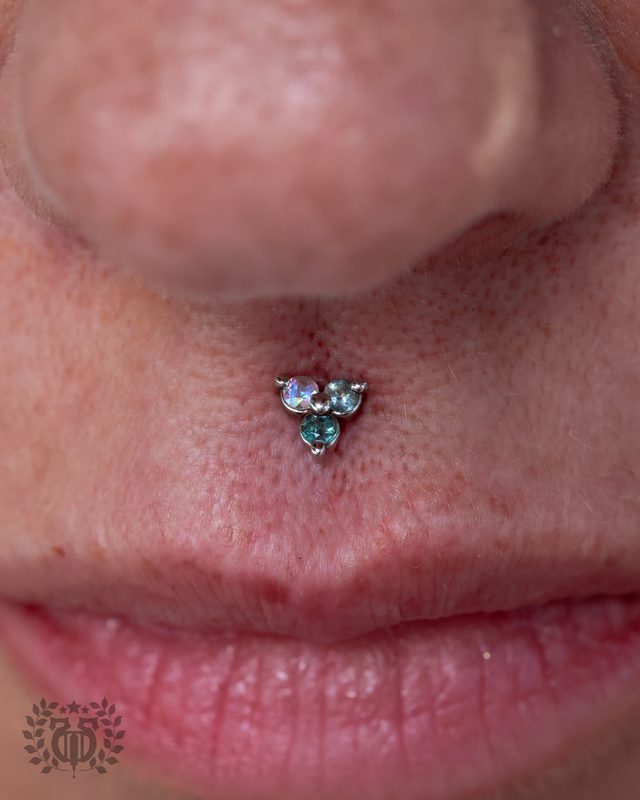
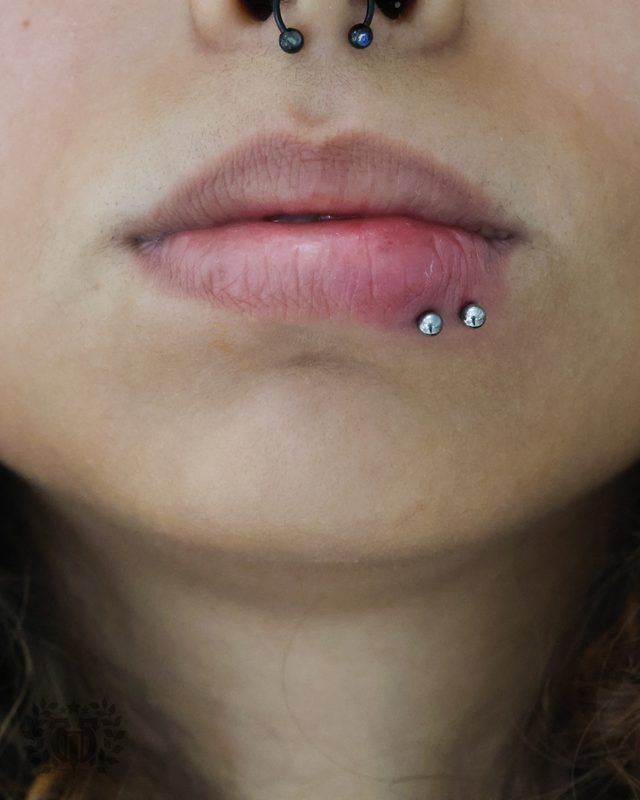
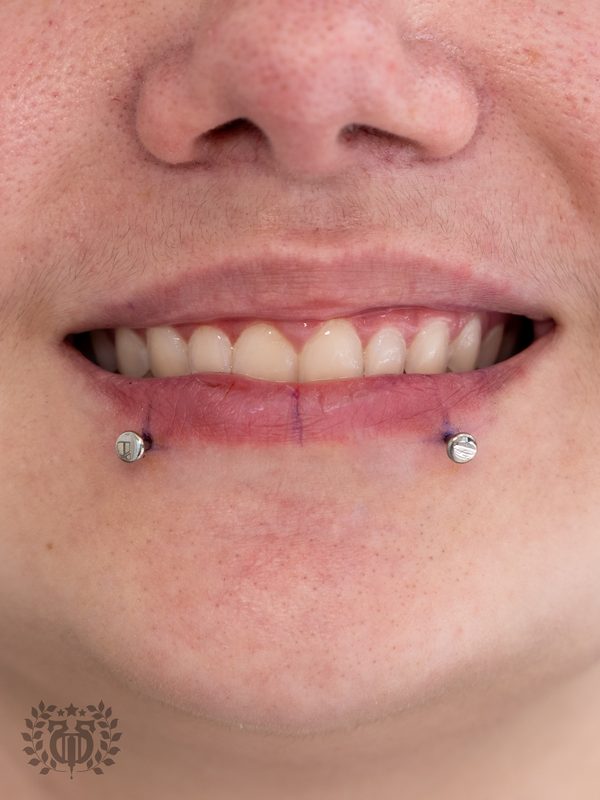
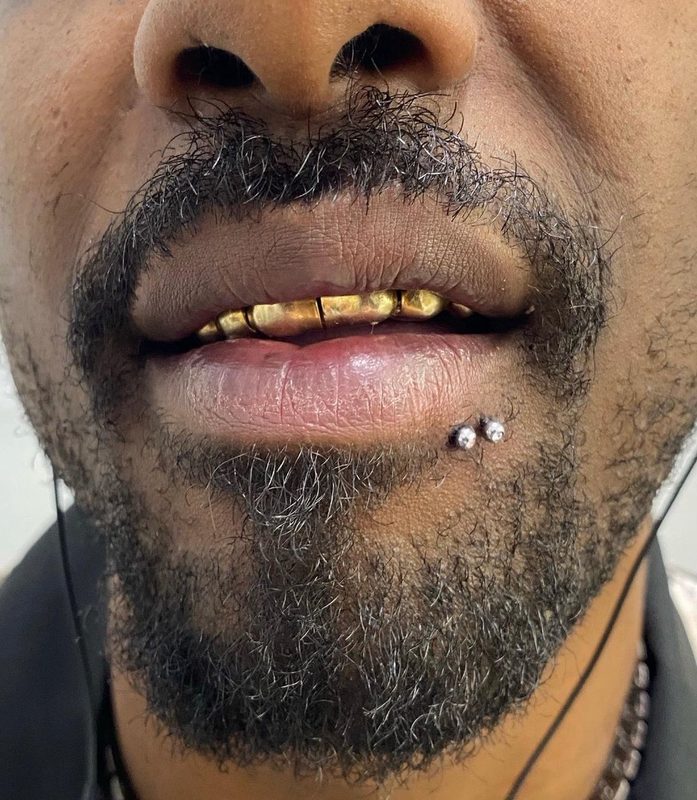
Standard labret placements in implant-grade titanium and solid gold, pierced needle-only by Fakir-certified piercers.